
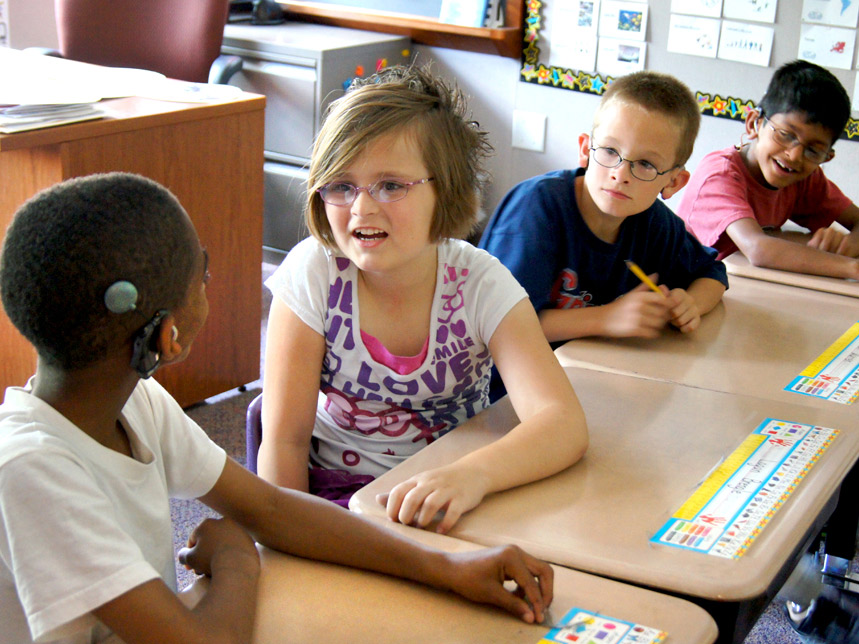
 In the CID Virginia J. Browning Primary School, children ages 5–12 are individually assessed and grouped by their learning needs in each subject area. Students maintain a daily schedule similar to general education elementary school settings, working with one or more teachers each day across academic areas. Daily subjects include language, speech and listening skills, reading, writing, math and social studies. Every classroom is thoughtfully equipped to foster unlimited interactive learning opportunities for children.
The CID primary school is directed by a master coordinating educator who works with the other teachers to continually review and revise each child’s educational program. The student–teacher ratio is better than 5–1. Using formal assessments, individual IEP goals, daily language sampling and lesson reflection, the teachers stay attuned to each child’s skills and pursue precise educational goals. Flexible scheduling enables them to quickly adjust educational objectives and procedures to foster the most possible progress for each child.
The students work hard, have fun and experience success. Each time they master a learning objective they build confidence and tenacity to take on new goals. Special classes in art, music, media literacy and social skills are included in each student’s weekly schedule. They go on educational field trips in the St. Louis community two or three times a year.
Preparing students for general education involves increased levels of independence. This includes studying and homework follow-through, knowledge of school materials and routines and knowing how actively participate and work collaboratively with peers in group discussions and projects.